A note from the clinic
Hearing in noisy places during the NYC holidays: an audiologist’s guide
Originally published on New York City Hearing Associates.
This guide follows a typical NYC holiday calendar, from Broadway to the ball drop, with practical ways to hear the people you came to see and protect your ears while you are out.
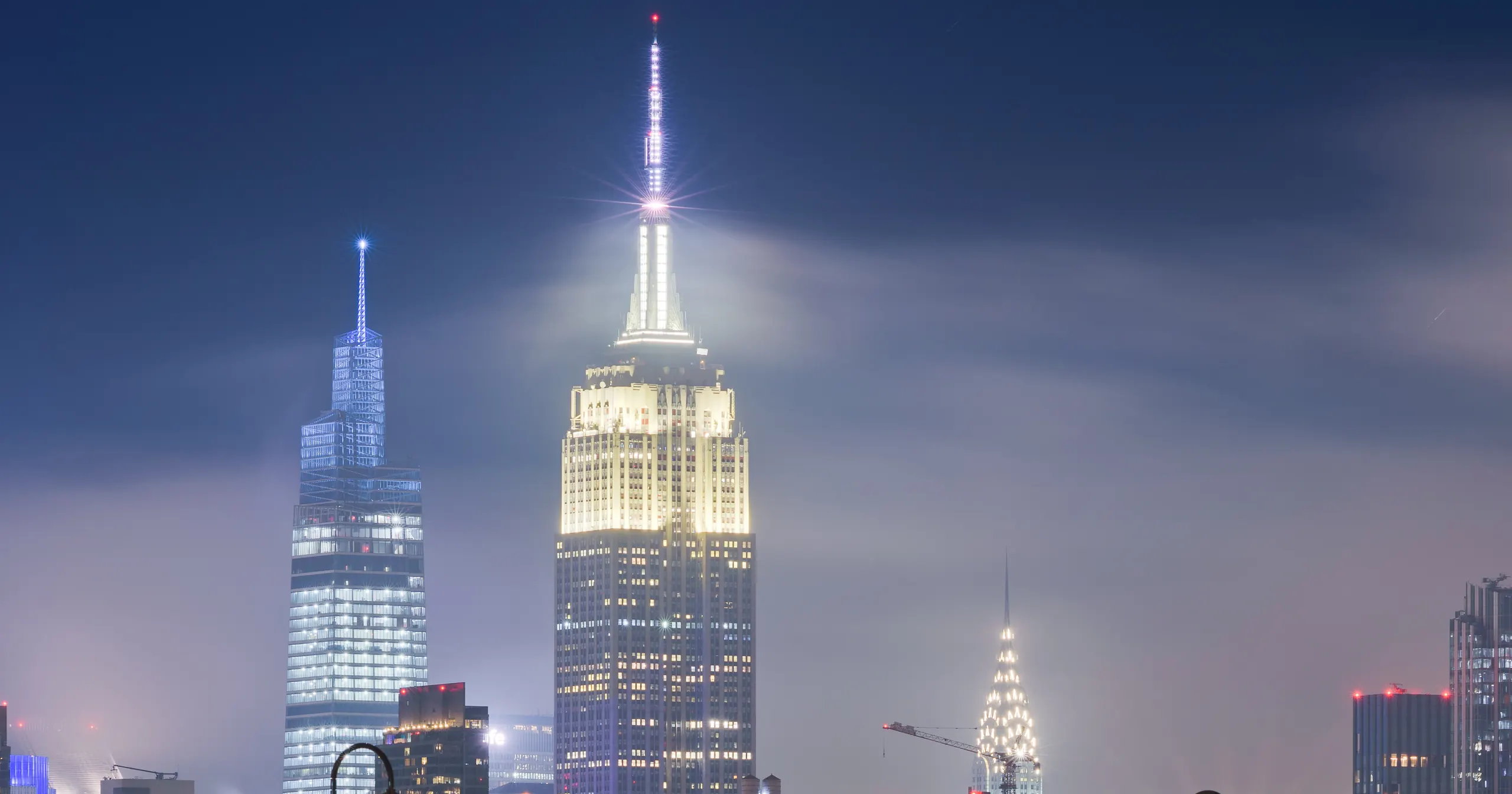
Between Thanksgiving and New Year’s Day, New York turns the volume up. There are matinees and holiday shows, packed markets, office parties in crowded bars, and subway cars full of shoppers. For many of our patients, hearing in noisy places becomes the biggest challenge of the season, whether or not they wear hearing aids.
The dinner table is only one part of it. This guide follows a typical NYC holiday calendar, from Broadway to the ball drop, with practical ways to hear the people you came to see and protect your ears while you are out. It also covers the new AI speech-focus hearing aids we are most excited about and when it makes sense to see an audiologist before the season gets busy.
NYC Hearing Associates
Want your hearing aids ready for a busy holiday season?
See a Doctor of Audiology. New patients are welcome by personal referral.
Why the holidays in New York are so demanding on your ears
Most holiday noise is not dangerous on its own. The trouble is that it piles up. Background chatter, music, and hard surfaces make speech harder to pick out, and the brain has to work harder to fill in the gaps. That listening effort is why a long party can leave you drained even when you followed most of the conversation.
Some holiday events are also loud enough to matter for your long-term hearing. The National Institute on Deafness and Other Communication Disorders (NIDCD) notes that sounds at or below 70 A-weighted decibels (dBA) are unlikely to cause hearing loss, while long or repeated exposure at or above 85 dBA can. NIDCD lists normal conversation at about 60 to 70 dBA, concerts and sporting events at about 94 to 110 dBA, and fireworks shows at 140 to 160 dBA. The louder the sound, the less time it takes to cause damage.
A useful rule: if you have to raise your voice to talk to someone at arm’s length, the room is probably loud enough to wear you out, and possibly loud enough to protect against.
Broadway, Radio City and holiday shows: ask for listening help
A holiday show is one of the best NYC traditions, and also one of the easiest places to miss dialogue. Fortunately, theaters have tools that many people never ask about.
- Assistive listening devices. According to Theatre Access NYC, Broadway theaters offer infrared listening devices and neck loops at no charge at a booth in the lobby. Bring a photo ID, since one is required to borrow a device. Reserve here: Sound Associates.
- Hearing loops and telecoils. Many Broadway houses list loop systems. If your hearing aids have a telecoil (T-coil) program, a loop or neck loop sends the sound from the stage straight to your hearing aids, with far less room echo. Ask us to turn on a telecoil program if your devices have one.
- Captioning on your phone. GalaPro is an app that sends closed captions, and audio description, to your own phone at participating Broadway theaters. Download it and register before the show. At the theater, put your phone in airplane mode and connect to the venue’s GalaPro Wi-Fi network just before the performance starts. Many theaters also offer handheld captioning devices, so check what your show offers before you buy tickets.
- Stream the sound at The Shed. At The Shed in Hudson Yards, a QR code that works with Made for iPhone (MFi) and Android devices lets you sync your phone, and your hearing aids or headphones, to the venue’s sound system wirelessly. The Shed also lends assistive listening devices at the theater entrance, holding a driver’s license while you borrow one. See The Shed’s accessibility page for details before your visit.
- Listen to the cast album first. Play the show’s soundtrack a few times in the days before you go. When the lyrics are already familiar, it is much easier to follow the songs in the theater, even when the orchestra is loud.
Before you go, look up your show on Theatre Access NYC, arrive a little early to pick up a device, and choose seats with a clear view of the performers’ faces. For other large venues and concerts, ask guest services what assistive listening options are available.
Auracast: a new way to tune in
A newer option, Auracast broadcast audio, is also starting to appear in New York theaters. On Broadway, the Todd Haimes Theatre and the August Wilson Theatre now offer it, so if your hearing aids, cochlear implant processor, or earbuds are Auracast-compatible, you can often tune in directly, or borrow a complimentary receiver at the theater. As accessibility advocate Bill Schiffmiller has written in Forbes, “Auracast is the first mainstream audio technology that does not require someone to declare a need to benefit from it.” It is still early days here. Lincoln Center has tested it at David Geffen Hall, but it is not yet listed as a regular public service, so it is always worth checking with the venue before you go. Hearing loops remain a wonderful option at several Broadway and Lincoln Center theaters if your devices have a telecoil.
For venues
Interested in making your establishment an Auracast-friendly one?
Holiday markets, Rockefeller Center crowds and the subway
Strolling Bryant Park or Union Square, or squeezing in to see the tree at Rockefeller Center, means steady crowd noise with no quiet corner to retreat to. Outdoors, there are also no walls to bounce sound back toward you, so voices fade quickly with distance.
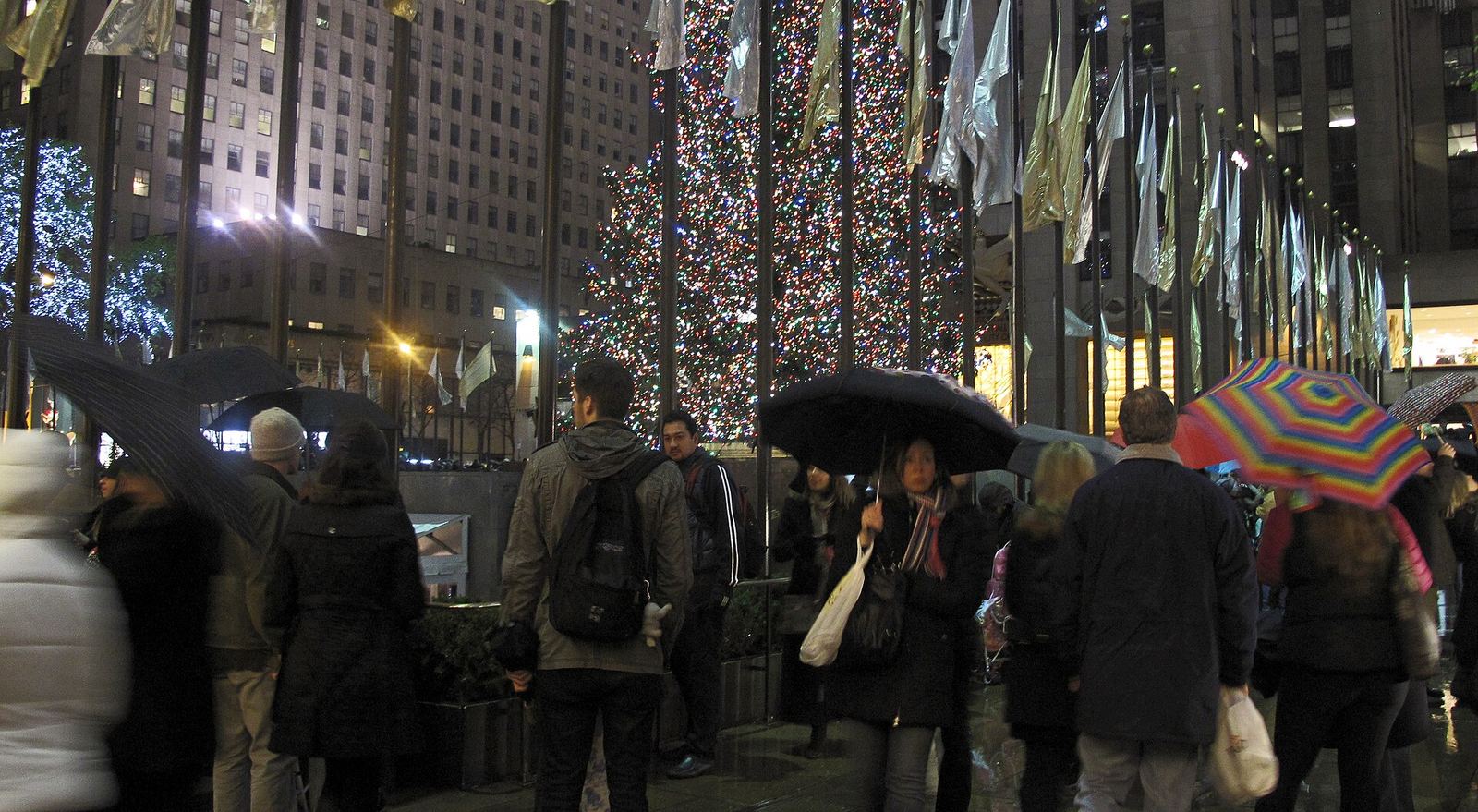
- Walk side by side, not single file. Keep your companion on your better-hearing side and close enough to see their face.
- Plan the talking for later. Save the real catch-up for a café or a quieter block, and use the market for looking and pointing.
- Agree on a meeting spot. In a crowd, a text or a pre-planned landmark beats shouting over the noise.
- Mind the train. Subway platforms and screeching curves can get very loud. Step back from the edge, avoid turning up your earbuds to drown out the noise, and consider earplugs on a long, noisy ride. Our post on navigating the subway with hearing loss has more commuting tips.
Cold weather matters too. If you wear hearing aids, a hat or headband over the ears helps keep wind noise down, and bringing the devices in from the cold to a warm room can cause condensation. Wipe them dry and keep a drying kit at home.
Office parties and holiday receptions
Standing receptions are tricky because the conversation moves. People drift in and out of small groups, music plays overhead, and you rarely get to pick your seat. A few habits help:
- Move to the edge of the room. Settle away from the bar, the DJ, and the kitchen door, and turn so the noisiest part of the room is behind you. Hearing aid directional microphones work best when the person you are talking to is in front of you and the noise is not.
- Keep groups small. Two or three people are much easier to follow than a circle of eight. It is fine to step aside with one colleague for a real conversation.
- Say what helps. A simple “It’s loud in here, could you face me when you talk?” is something most people are happy to do.
- Take quiet breaks. A few minutes in the hallway or outside gives your ears, and your concentration, a rest.
If you find yourself nodding along at every work event, that is worth paying attention to. Difficulty following speech in noise is often one of the first things people notice when their hearing changes.
Family time: hearing kids and grandkids
Children’s voices are higher pitched and softer, and children rarely stay still or face you when they talk. That makes them one of the hardest groups to hear for anyone with high-frequency hearing loss, which is the most common pattern we see.

- Get down to their eye level, and turn off the TV during the conversation.
- Ask them to show you their gift or drawing at the table, where the light is good and you can see their face.
- Pass along the same advice to the kids that you would follow yourself. NIDCD notes that noise-induced hearing loss can happen at any age, including in children. For loud shows and fireworks, child-size earmuffs are an easy fix, and the American Speech-Language-Hearing Association (ASHA) suggests keeping personal devices at 60% volume or lower.
Hearing aid features that help in a crowd
Our favorite hearing aids right now feature new AI-powered speech-focus technology, and holiday crowds are exactly where it shines. Several of today’s leading hearing aid manufacturers now build artificial intelligence into their processors, trained on huge libraries of real-world sound. In a busy room, these hearing aids work to pick out the voice in front of you and turn down the clatter, music, and chatter around it, adjusting moment to moment as the scene changes.
- AI speech focus. The hearing aid recognizes speech, separates it from background noise, and brings the voice you are facing forward. The goal is to make noisy restaurants and parties easier to follow and less tiring.
- Automatic scene detection. The devices sense when you walk from a quiet street into a loud party and switch settings on their own, so you are not fumbling with buttons.
- Directional microphones. These favor sound coming from the direction you are facing. They work best when you turn toward the person speaking and keep the noise behind you.
- Remote and table microphones. A small microphone clipped to a companion or placed in the middle of a table can send their voice straight to your hearing aids, which helps even more in the loudest rooms.
- Streaming and Auracast. Streaming lets phone calls and video chats with distant family go directly to your hearing aids. Auracast is a newer Bluetooth broadcast audio technology that lets compatible devices tune in to shared audio, such as a TV or a public broadcast, where it is offered.
- The phone app. Most hearing aid apps let you change programs and volume discreetly, without touching your ears.
Each manufacturer approaches AI speech focus a little differently, and the best choice depends on your hearing test, your ears, and the places you go most. That is why we recommend a specific device only after a full evaluation and a conversation about your listening goals. Explore the options on our hearing aids page, or read more about what AI hearing aid technology means for everyday users.
If your current hearing aids sound weaker than they used to, whistle, or feel uncomfortable, bring them in before your calendar fills up. A cleaning, a check of the microphones and domes, and a review of your settings can make a noticeable difference. If your devices are a few years old, ask whether a newer model with AI speech focus could help in the situations you find hardest.
Concerts and New Year’s Eve: play smart with custom earplugs
From holiday concerts and big-room shows to the Times Square countdown and midnight fireworks, December has some of the loudest nights of the year. You do not have to sit them out. You just need the right protection.
- Custom musician earplugs. Molded to your ears and fitted with filters, these lower the volume more evenly than foam plugs, so music and voices still sound natural. They are a favorite with performers, music teachers, and concertgoers.
- Custom in-ear monitors for performers. If you play holiday gigs, in-ear monitors let you hear your mix at a safer level. Play smart, hear smart.
- Distance and breaks. Step away from speakers and take listening breaks in a quieter spot. ASHA recommends both as easy ways to reduce noise exposure.
Learn more on our musician products and custom earplugs page, in our guide to custom ear molds for musicians and performers, and in how loud fireworks are. Custom earplugs take time to make from your ear impressions, so book soon if you want them by New Year’s Eve.
Ringing after a loud night? What your ears are telling you
Muffled hearing or ringing after a concert or party is a sign your ears had too much noise. NIDCD notes that many people experience tinnitus after loud noise exposure, and that noise-induced hearing loss can be temporary or permanent. Give your ears quiet time to recover, and use protection next time.
Call us if the ringing or muffled feeling lasts more than a day or two, keeps coming back, or affects one ear more than the other. Sudden hearing loss is different: NIDCD advises treating sudden deafness symptoms as a medical emergency and seeing a doctor immediately. Read more in ringing in the ears after a concert, or learn about our tinnitus solutions.
Your holiday hearing checklist
- Hearing aids cleaned, checked, and charged, with spare domes or batteries packed.
- A speech-in-noise program set up, and you know how to switch to it.
- A remote microphone for parties, if your hearing aids support one.
- If your hearing aids are a few years old, a conversation with us about newer models with AI speech-focus technology.
- Theater access devices reserved or planned for any shows.
- Earplugs or earmuffs for concerts, fireworks, and the kids.
- A hearing test on the calendar if you have not had one in the past year, or if group conversations have been getting harder.
Book a hearing test or tune-up before the holidays
If noisy places have been getting harder, a comprehensive hearing test with one of our Doctors of Audiology is the right first step. Not ready to come in yet? Try our complimentary online hearing check from home. It is not a diagnosis, but it can help you decide whether a visit makes sense.
We go over your benefits at the visit and are happy to investigate them beforehand. See our insurance and benefits page or upload your card on the check your insurance benefits form. Our offices:
- Midtown West: 110 W 40th St, Suite 500, New York, NY 10018, near Bryant Park. Phone: 212-354-2360.
- Chelsea: 80 Eighth Ave, Suite 1501, New York, NY 10011 (entrance on 14th Street). Phone: 212-354-2360.
- Upper West Side: 41 W 72nd St, Suite 1C, New York, NY 10023. Phone: 212-354-2360.
- Garden City: 229 7th St, Suite 307, Garden City, NY 11530. Phone: 516-408-3006.
An Upper East Side office is coming soon.
December is one of our busiest months, so request an introduction, or call 212-354-2360 early. New patients are welcome by personal referral.
By personal referral
Request an introduction
If you would like to be seen before the holidays get busy, call or request an introduction. New patients are welcome by personal referral.
Frequently asked questions
Why is it so hard to hear in noisy places, even with hearing aids?
Background noise covers the softer parts of speech, and the brain has to work harder to fill in the gaps. Hearing aids help, especially newer models with AI speech-focus technology, but they work best with the right settings, directional microphones, good positioning, and sometimes a remote microphone. An audiologist can adjust these for the places you actually go.
What is AI speech-focus technology in hearing aids?
It is a new generation of hearing aid processing, now offered by several leading manufacturers, that uses artificial intelligence to recognize speech, pick out the voice in front of you, and reduce background noise in noisy places. Our favorite hearing aids right now include it. Which model is right for you depends on your hearing evaluation and lifestyle.
Do Broadway theaters have assistive listening devices?
Yes. Theatre Access NYC says Broadway theaters offer infrared listening devices and neck loops at no charge at a lobby booth, with a photo ID required. Many also list hearing loop systems and captioning. Check your show on theatreaccess.nyc before you go.
Are holiday concerts and fireworks loud enough to damage hearing?
They can be. NIDCD says long or repeated exposure at or above 85 dBA can cause hearing loss, and lists concerts at about 94 to 110 dBA and fireworks shows at 140 to 160 dBA. Earplugs, distance from the speakers, and listening breaks all reduce the risk.
Is ringing in my ears after a loud party normal?
Ringing after loud noise is common and often fades, but it means your ears were overexposed. If it lasts more than a day or two, keeps returning, or comes with sudden hearing loss, see a hearing professional. Sudden hearing loss should be treated as a medical emergency.
When should I book a hearing aid tune-up before the holidays?
Early December or sooner is best, because appointments fill up quickly near the end of the year. Bring your hearing aids and charger, and tell us which holiday situations are hardest so we can adjust your settings for them.
Sources
- NIDCD: Noise-Induced Hearing Loss
- NIDCD: Tinnitus
- NIDCD: Sudden Deafness
- NIDCD: Assistive Devices for People with Hearing, Voice, Speech, or Language Disorders
- CDC: What Causes Noise-Induced Hearing Loss
- ASHA: Noise and Hearing Loss Prevention
- Sound Associates: Broadway hearing assistance device reservations
- GalaPro: closed captioning and audio description app for live performances
- Theatre Access NYC: Frequently Asked Questions
- Bluetooth SIG: Auracast broadcast audio
This article is general information, not medical advice. Please see a hearing professional about your own hearing.
Featured photo: King of Hearts / Wikimedia Commons, CC BY-SA 4.0.